Introduction
Many contractors assume their obligations end the moment a project is handed over. Punch list signed, keys exchanged. Done. But project owners, municipalities, and developers often see it differently. They want a financial guarantee that the work will hold up months, or even years, after completion. That's where a maintenance bond comes in.
A maintenance bond is the post-completion safeguard that protects project owners from defects in workmanship discovered after a contractor leaves the site. This guide covers what a maintenance bond is, what it covers, when it's required, how it compares to a performance bond, and what it costs.
Key Takeaways:
- A maintenance bond guarantees a contractor will repair workmanship defects that emerge after project completion
- It is a three-party surety agreement between the contractor, project owner, and bonding company
- Public works and subdivision development projects most commonly require them
- Premiums vary based on bond amount, contractor credit history, and project complexity
- Performance bonds cover the construction phase; maintenance bonds cover the warranty period that follows
What Is a Maintenance Bond?
A maintenance bond (also called a warranty bond) is a type of surety bond that guarantees a contractor will repair or correct defects in workmanship discovered during a defined period after construction is complete. NASBP confirms that a warranty/maintenance bond guarantees the owner that "workmanship and material defects found in the original construction will be repaired during the warranty period."
A maintenance bond is not insurance. If the surety pays a valid claim, the contractor must reimburse the bonding company — the financial burden stays with the contractor, not the surety.
The Three-Party Structure
Every maintenance bond involves three parties:
- Principal — the contractor who purchases the bond
- Obligee — the project owner or public agency who is protected
- Surety — the bonding company that guarantees the contractor's performance
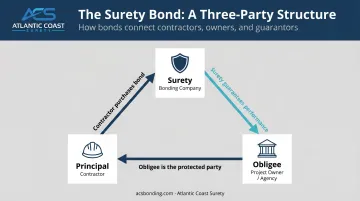
If a valid defect claim is filed during the coverage period, the surety compensates the obligee. Then the surety seeks reimbursement from the contractor — the principal.
How Long Does Coverage Last?
The maintenance period is defined in the contract. Common durations are one to two years post-completion, though complex public infrastructure projects may carry longer requirements. Once that window closes, the surety's obligation expires. Defects discovered after the maintenance period cannot trigger a claim under the bond.
Maintenance bonds fall under the broader category of contract/construction surety bonds and often follow a performance bond. Where a performance bond covers project completion, a maintenance bond picks up after — protecting the owner against defects that surface once work is done.
What Does a Maintenance Bond Cover?
Covered Defects
Maintenance bonds cover defects that stem from the contractor's work during the warranty period. According to Travelers, maintenance bonds protect project owners from defective workmanship or materials for the period defined in the contract. Oregon's Department of Administrative Services similarly confirms that the bond protects against "defects and fault in materials, workmanship, and design if the project was done incorrectly."
Practical examples of covered defects include:
- Structural settling caused by improper subgrade preparation
- Leaking pipes due to faulty installation techniques
- Pavement cracking from incorrectly applied asphalt
- Electrical failures stemming from installation errors
What's Typically Not Covered
Not every post-completion problem triggers a valid claim. Maintenance bonds are not a blanket warranty against all failures. Common exclusions include:
- Normal wear and tear from regular use
- Owner-caused damage or modifications
- Third-party damage, including vandalism
- Design defects when someone other than the contractor created the design
- Material failures unrelated to how the contractor installed them
Bond Amount vs. Premium
The bond amount — which caps the surety's maximum liability — is often set as a percentage of the original contract value. Requirements differ by jurisdiction:
- Oregon City requires a bond equal to a percentage of material and construction costs for public infrastructure
- Carrollton, Texas requires a bond covering the full cost of maintaining or repairing public improvements
This bond amount sets the surety's liability ceiling — the contractor's actual out-of-pocket expense is the premium, which is covered in the cost section below.
When Are Maintenance Bonds Required?
Public Works Projects
Maintenance bonds are most common on government and public works construction. State transportation departments and municipal agencies frequently mandate them as a condition of final project acceptance. Common project types include:
- Roadway and highway construction
- Water and sewer system installation
- Stormwater drainage infrastructure
- Sidewalk and curb work
- Public building construction
Riverside, Iowa's subdivision regulations require maintenance bonds for two years from formal city acceptance, covering street paving, sidewalks, water mains, and sewers. Carrollton, Texas ties the requirement directly to acceptance of public improvements.
Subdivision Development
For residential and commercial subdivision developers, maintenance bonds often become a condition of final plat approval or infrastructure handoff to the city or county. A municipality accepting a new subdivision's roads, utilities, and drainage wants assurance that those improvements won't fail immediately — that assurance comes from a maintenance bond.
Municipal bond requirements vary significantly by jurisdiction — some tie the bond amount to a percentage of improvement costs, others set fixed terms based on project type. Atlantic Coast Surety works with subdivision developers to match those specific requirements with the right bond programs from A-rated, T-listed carriers.
Private Commercial Projects
Maintenance bonds on private commercial projects aren't always legally required — but they're increasingly standard contract terms. Lenders and private developers include them to limit post-completion defect exposure, particularly on larger contracts where latent repair costs can escalate quickly.
Maintenance Bond vs. Performance Bond
These two bonds are often confused, and contractors sometimes assume one covers the other's purpose. It doesn't work that way.
| Factor | Performance Bond | Maintenance Bond |
|---|---|---|
| When active | During construction | After construction |
| Risk covered | Contractor fails to complete project | Defects in completed workmanship |
| Claim trigger | Contract default or abandonment | Warranty defects during coverage period |
| Required by law | Federal law (Miller Act) for federal projects above the applicable threshold | Varies by jurisdiction; common on public works |
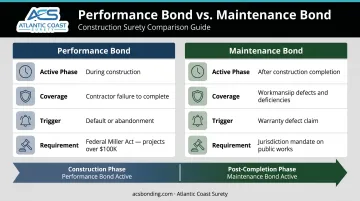
The two bonds are sequential protections, not competing ones. The performance bond covers the risk that the work won't get done. The maintenance bond covers the risk that what got done won't hold up.
A Common Contractor Misconception
Contractors who have already furnished a performance bond sometimes assume their bonding obligations are complete. Many public agencies require a separate maintenance bond before issuing final project acceptance or releasing retainage — the performance bond alone doesn't satisfy that requirement.
There is a practical upside here. A surety that already underwrote a project through a performance bond typically issues the maintenance bond with less friction — the contractor's financial profile and project history are already on file, which speeds up the approval process.
How Much Does a Maintenance Bond Cost?
Premium Structure
The cost of a maintenance bond is a premium calculated as a percentage of the bond amount — not the full contract value. Several factors influence where your premium lands:
- Contractor credit history and financial statements — the surety will run a credit review before issuing the bond
- Total contract value and bond amount required
- Length of the maintenance period — longer coverage periods carry more risk
- Project type and complexity — Oregon DAS notes that sureties weigh contractor loss experience, assets, and financial condition
Bundling with a Performance Bond
When a maintenance bond accompanies a performance bond on the same project, the first year of maintenance coverage is often included at no additional charge. Oregon DAS confirms that "a performance bond sometimes includes a maintenance guarantee for one year without additional charge." The Texas Department of Insurance similarly notes that "maintenance clauses or maintenance bonds for up to 12 months are normally included in the performance bond."
When subsequent years are required, they carry an additional premium — though typically at a lower rate than the initial coverage year.
A Simple Example
Here's how the bond amount and premium interact in practice:
The bond amount is typically a percentage of the contract value, as set by the obligee's requirements. The premium is a percentage of that bond amount — not of the full contract value. The distinction matters: the bond amount is the maximum claim liability, while the premium is what you actually pay.
Insurance agents placing maintenance bonds for contractor clients can work with a wholesale surety broker to access multiple carrier markets and find the program that fits the project's specific coverage period and risk profile.
Key Benefits of Maintenance Bonds
For Project Owners
Without a maintenance bond, a project owner who discovers a defect after handover faces an unpleasant choice: pay for repairs out of pocket or pursue the contractor through litigation. Both options are expensive and slow. A maintenance bond provides a defined, enforceable financial remedy during the warranty period — no lawsuit required to trigger it.
For Contractors
A maintenance bond does more than protect the owner. For contractors, it signals financial accountability to the agencies and developers who award contracts. Bonded contractors are more competitive on public project bids, particularly where bonding is a prerequisite to even submitting.
There's also a practical cash-flow benefit. Bonded contractors can expect:
- Faster final payment — many public agencies withhold retainage until a maintenance bond is in place
- Fewer closeout delays — having bonding ready avoids payment gaps that can stretch weeks or months on larger public projects
- Stronger bid positions — on projects where bonding is mandatory, being pre-qualified removes a common disqualifier
Atlantic Coast Surety works exclusively in surety, giving contractors and their agents access to A-rated, T-listed carriers and programs structured for their project type — without routing through a generalist broker.
How to Obtain a Maintenance Bond
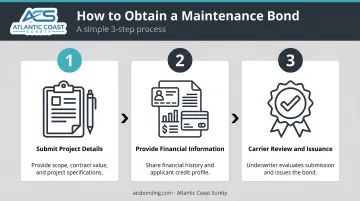
The application process is straightforward, particularly for contractors with an existing surety relationship. Here's the typical sequence:
- Submit project details — contract value, required bond amount, maintenance period duration, and any closeout documentation the agency requires
- Provide financial information — the surety will review the contractor's credit profile and financial standing, similar to a performance bond underwrite
- Carrier review and issuance — once approved, the bond is issued and submitted to the obligee to satisfy the project acceptance requirement
Contractors who already have a performance bond with a surety carrier typically move through this process faster. The underwriter already knows the contractor's financial profile and project history, so approvals move without the delays of a cold application.
Working with a specialized surety bond agency, rather than a general insurance broker, matters here. Atlantic Coast Surety operates exclusively in surety bonds, with in-house underwriting authority and direct access to multiple surety markets. For contractors managing several projects simultaneously or navigating specialty bond requirements, that focus translates to faster turnaround and fewer back-and-forth delays.
Frequently Asked Questions
What is the purpose of a maintenance bond?
A maintenance bond guarantees that a contractor will correct defects in workmanship that appear after a project is completed. It protects the project owner from repair costs during a defined warranty period without requiring litigation to enforce the remedy.
How much do maintenance bonds cost?
Costs are calculated as a percentage of the bond amount, based on the contractor's credit profile and project details. When bundled with a performance bond, the first year of coverage is often included at no additional charge. Subsequent years typically carry a lower additional premium.
What is the difference between a maintenance bond and a performance bond?
A performance bond protects the owner during construction by guaranteeing the contractor will complete the project. A maintenance bond protects the owner after construction by guaranteeing that workmanship defects will be corrected during the warranty period. Both bonds serve the same owner but address different phases of the same project.
What does a maintenance bond cover?
It covers defects resulting from poor workmanship or improper installation discovered during the maintenance period. Normal wear and tear, owner-caused damage, and material failures unrelated to the contractor's installation method are generally not covered.
How long does a maintenance bond last?
The maintenance period is set by the contract and typically runs one to two years after project completion. Public infrastructure projects, particularly those managed by state transportation departments, may carry longer warranty requirements depending on the jurisdiction.